Davie Calls Itself Cowboy Town. The Zoning Code Is More Specific Than That.
October 1, 2026
October 1, 2026
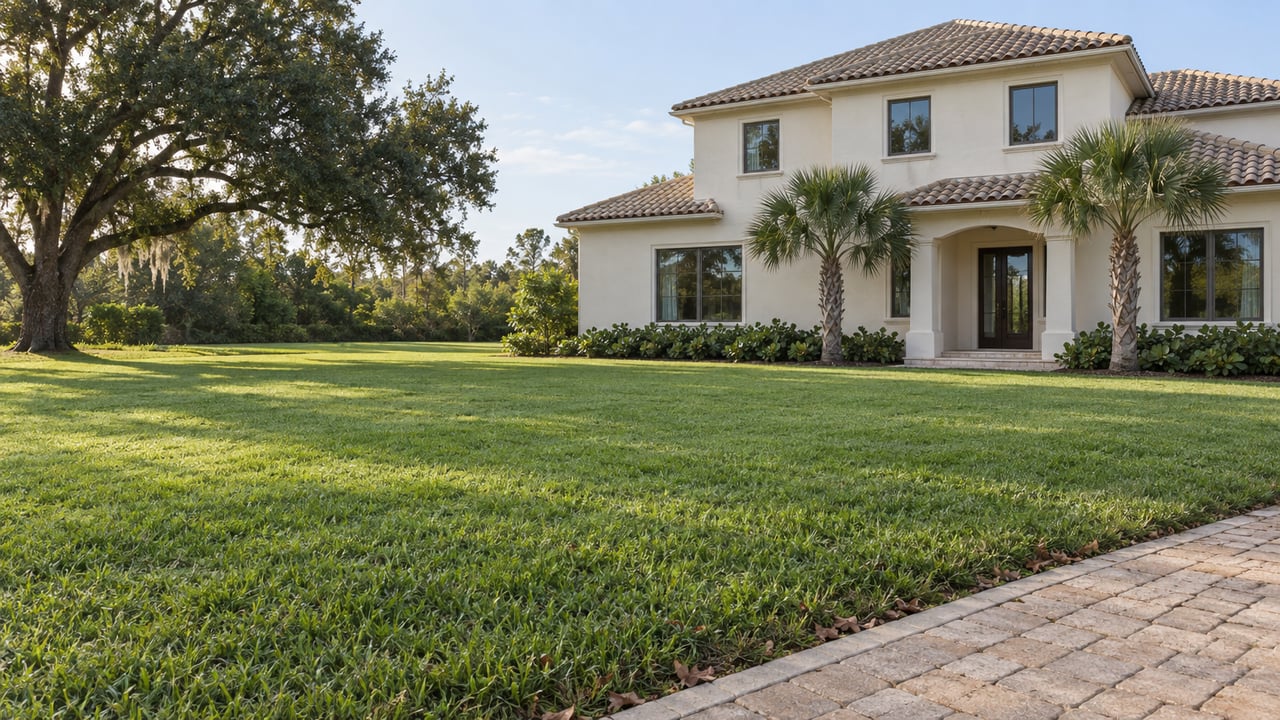
A buyer touring western Davie sees the trails, the split-rail fencing, the "Cowboy Town" signage near Bergeron Rodeo Grounds, and reasonably assumes that horses are part of the deal out here. Most of the time that assumption holds. But the right to keep a horse in Davie doesn't come from the town's reputation or from a listing description that says "equestrian." It comes from a specific line in the zoning code, and that line runs through the middle of neighborhoods that look identical from the street.
Davie's ordinances permit horses, cattle, goats, sheep, poultry, and rabbits in four zoning districts: RR, AG, A-1, and R-1. Other residential districts generally prohibit livestock, though the Hobby Farm program described below provides a certification path for limited agricultural activity in semi-rural residential neighborhoods. That means a property can sit two blocks from a horse-legal parcel, share the same lot size, the same fencing, even the same builder, and still not qualify. The zoning map, not the town's identity, decides. Checking the parcel’s zoning designation before closing helps buyers confirm whether their intended use is allowed.
According to the A-1 District, A-1 agricultural zoning runs one principal dwelling per acre. A-1, RR (Rural Ranches), AG (Agricultural), and R-1 (Estate Dwelling) permit horses. Move up into R-2, R-3, R-4, R-5, or any of the RM multifamily categories and the same activity is generally prohibited under the base zoning, though eligible properties may pursue Hobby Farm certification for limited agricultural activity.
The code gets granular in other ways too. Davie's animal ordinance specifically prohibits keeping swine of any type with one exception: a single Vietnamese Potbellied Pig kept as a household pet. That level of detail is worth noting for a simple reason. A code that specifies pig breed is not a code that leaves room for assumption on livestock more broadly. If a listing agent or a seller tells a buyer "horses are fine here," the only way to confirm it is to pull the parcel's actual zoning designation from the Town, not to take the neighborhood's general feel as an answer.
| Zoning district | Horses and livestock permitted |
|---|---|
| RR (Rural Ranches) | Yes |
| AG (Agricultural) | Yes |
| A-1 (Agricultural District) | Yes |
| R-1 (Estate Dwelling) | Yes |
| R-2 through R-5, RM categories | Generally no; check Hobby Farm eligibility |
The zoning line explains what's legally possible. It doesn't explain what a specific deed or homeowners association will actually allow, and in Davie those two things diverge even among neighborhoods marketed the same way.
Sierra Ranches, one of Davie's estate-style communities, is built on large lots with an equestrian-friendly setting. A few miles away, Stonebrook Estates at Kapok Grove is also a gated community associated with the equestrian lifestyle.
The broader mix of neighborhoods continues across the corridor. Neighborhoods like Arrowhead, Fox Ridge, Westridge, and Paddock Club are commonly described as offering equestrian lifestyles with private barns, while Forest Ridge nearby is built around a golf course rather than horse infrastructure. Western Davie is not one uniform horse district. It's a patchwork of zoning-eligible parcels, some with an HOA layered on top and some without, and buyers can identify the applicable restrictions by reviewing the deed and association documents for the specific address.
The Town maintains a United Ranches Preservation Board.
For a buyer, the practical step is to check the parcel's zoning district and review the Town's Zoning in Progress Notices page for an active amendment, an overlay designation, or a pending case that could affect what a new owner is allowed to build.
A zoning district that permits horses doesn't guarantee the parcel can physically support them. Two factors do most of the deciding: water and land.
Much of western Davie relies on septic systems rather than municipal sewer. An existing septic system may not have capacity for new equine infrastructure, a question that can arise during permitting after an offer is accepted.
Land is the second constraint. Horse professionals commonly plan for something in the range of 1.5 to 3 acres of pasture per horse, with supplemental feed or dry-lot arrangements reducing that requirement somewhat. That's a planning guideline rather than a Town-mandated ratio, but it matters because Davie's flood zones and wet soils narrow how much of a given acre is actually usable. Land near Pine Island Ridge and Tree Tops Park tends to sit on higher ground, which lowers flood exposure and, by extension, insurance cost. Land closer to the Everglades edge in western Davie can carry wetter soil.
These factors can be reviewed during a site visit or permitting process before an offer is made.
A standard homeowners policy is built around a house, not a horse. Owners who plan to keep horses on a Davie property typically need to add a farmowners or ranchowners policy, a separate equine liability policy, and often an umbrella policy on top of both. That's for private, personal use.
Davie has a formal Hobby Farm program that lets property owners apply for Town certification of limited agricultural activity, including horsekeeping, in semi-rural residential neighborhoods. An approved Hobby Farm receives a Town certificate, and agricultural activity that predates a 2003 ordinance change can carry legal nonconforming status that survives a change in ownership, meaning the use itself transfers with the property even if zoning rules shift later.
For a buyer, this is worth a direct question to the seller rather than an assumption.
Does living in western Davie automatically mean horses are allowed? No. The zoning district decides, not the general character of the area. RR, AG, A-1, and R-1 permit horses; in other residential districts, the Hobby Farm program offers a certification path for limited agricultural activity in semi-rural residential neighborhoods.
Can I keep a horse in a gated Davie community? Sometimes; it depends on both the parcel's zoning and the specific HOA's rules, so review the zoning designation and governing documents.
Buying a horse property in Davie means checking three separate things before writing an offer: the zoning district, the deed or HOA restrictions layered on top of it, and the site's actual capacity for septic, drainage, and usable pasture. Reviewing all three helps buyers assess whether a parcel can support their intended use.
If you're evaluating a specific Davie parcel and want someone to walk the zoning, deed, and site questions with you before you write an offer, High Equity Realty can help you sort through what a property actually allows before you fall in love with what it looks like.
This article is general information, not legal, tax or financial advice. Consult a qualified professional about your situation.

Get assistance in determining current property value, crafting a competitive offer, writing and negotiating a contract, and much more. Contact us today.